How AI perceives the neobanks: 10 spirit animals
Figures in this post describe a snapshot of 379 tracked neobanks. The dataset now tracks 381, so counts here will not match the live site — the analysis stands, but for current numbers use the browsable cuts, the live directory or data.json.
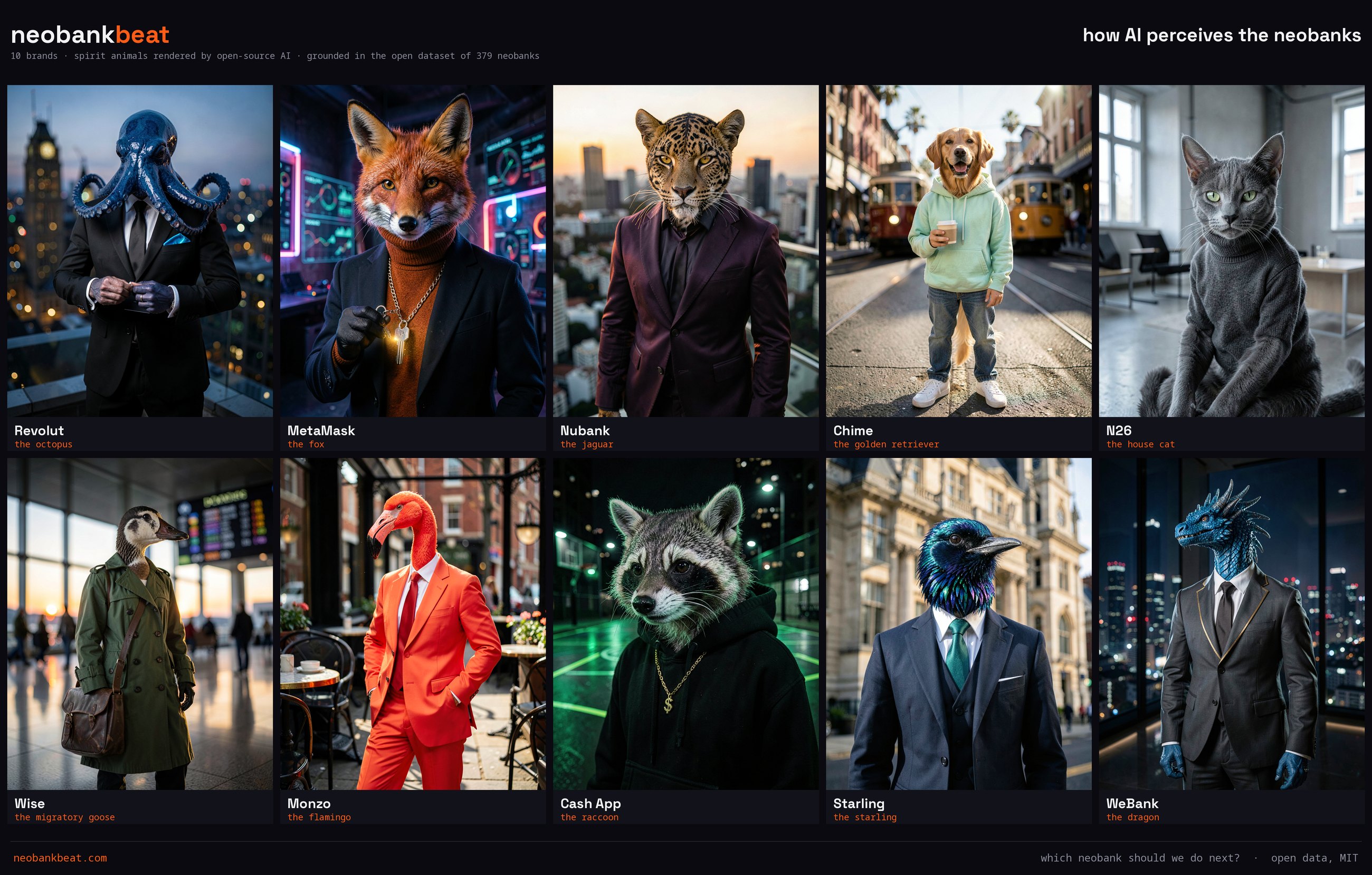
We spend our days verifying licenses, custody models and user counts for 379 neobanks — serious work about a serious question, who actually holds your money. This post is not that. We asked an image model a much less serious question: if this neobank were an animal, what would it be? No brand briefs, no art direction, no marketing team in the loop — just the model's honest associations, rendered as editorial fashion portraits.
The results are unreasonably on-brand. Every image was generated locally (details in the methodology note at the bottom), and every one of them is free to share — that's the point.
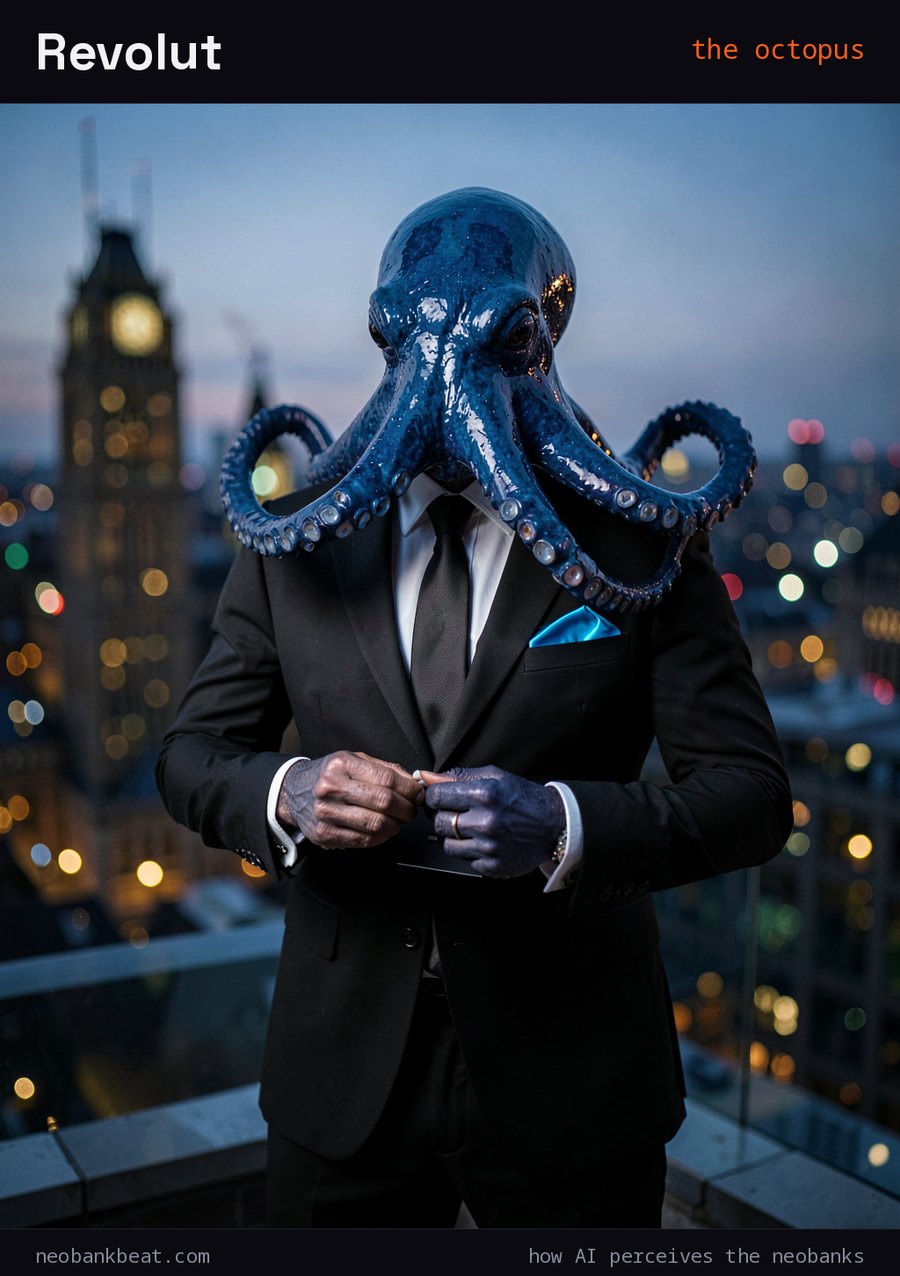
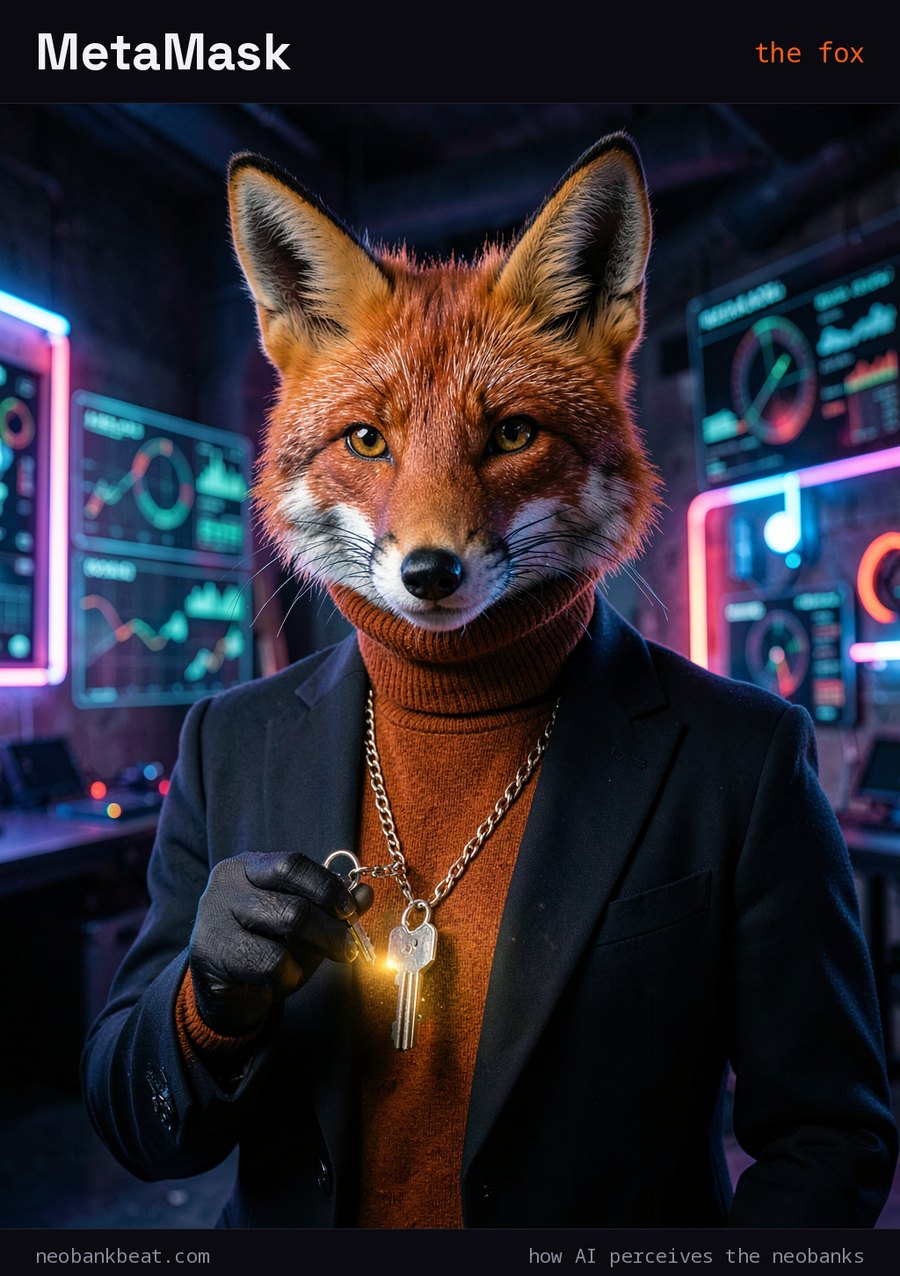
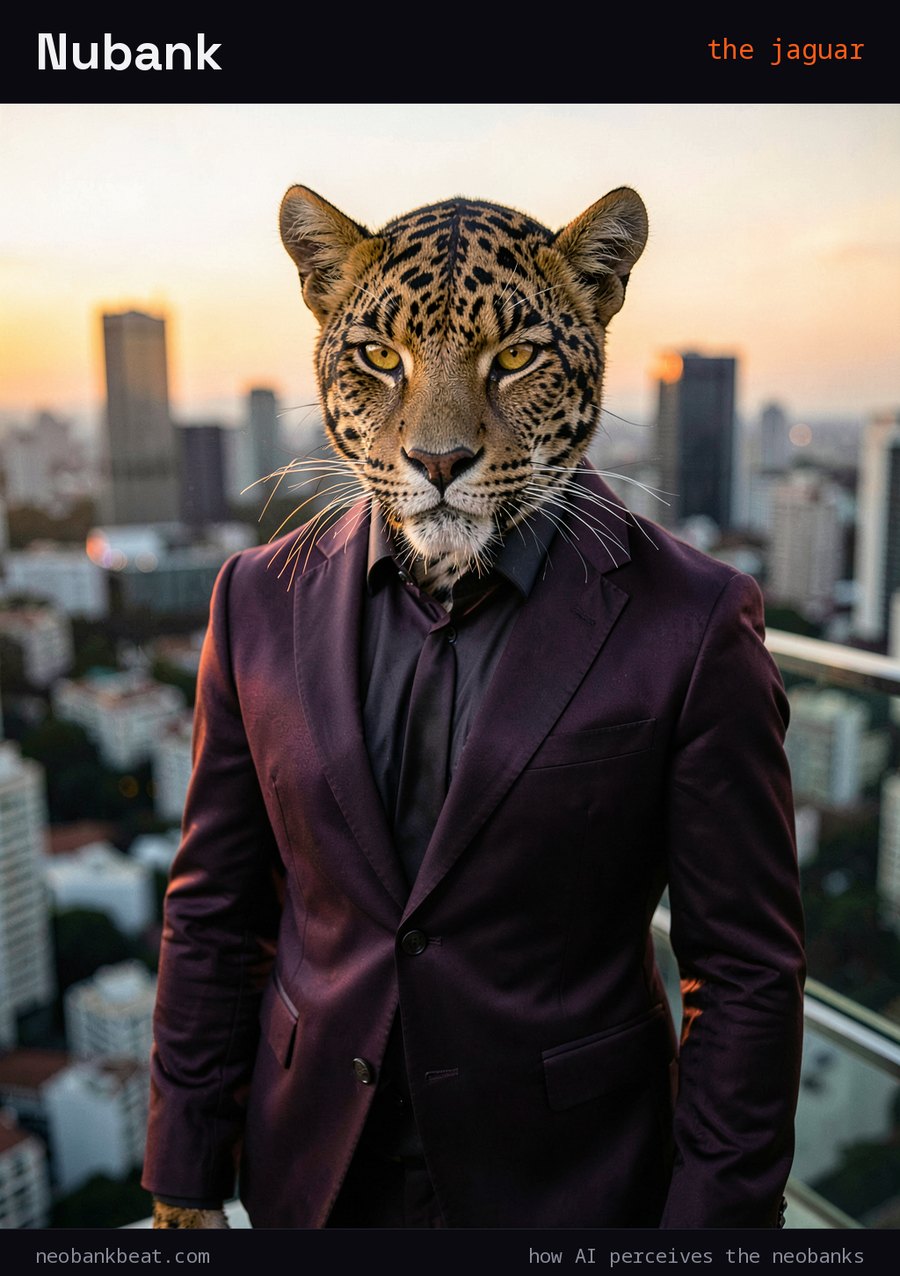
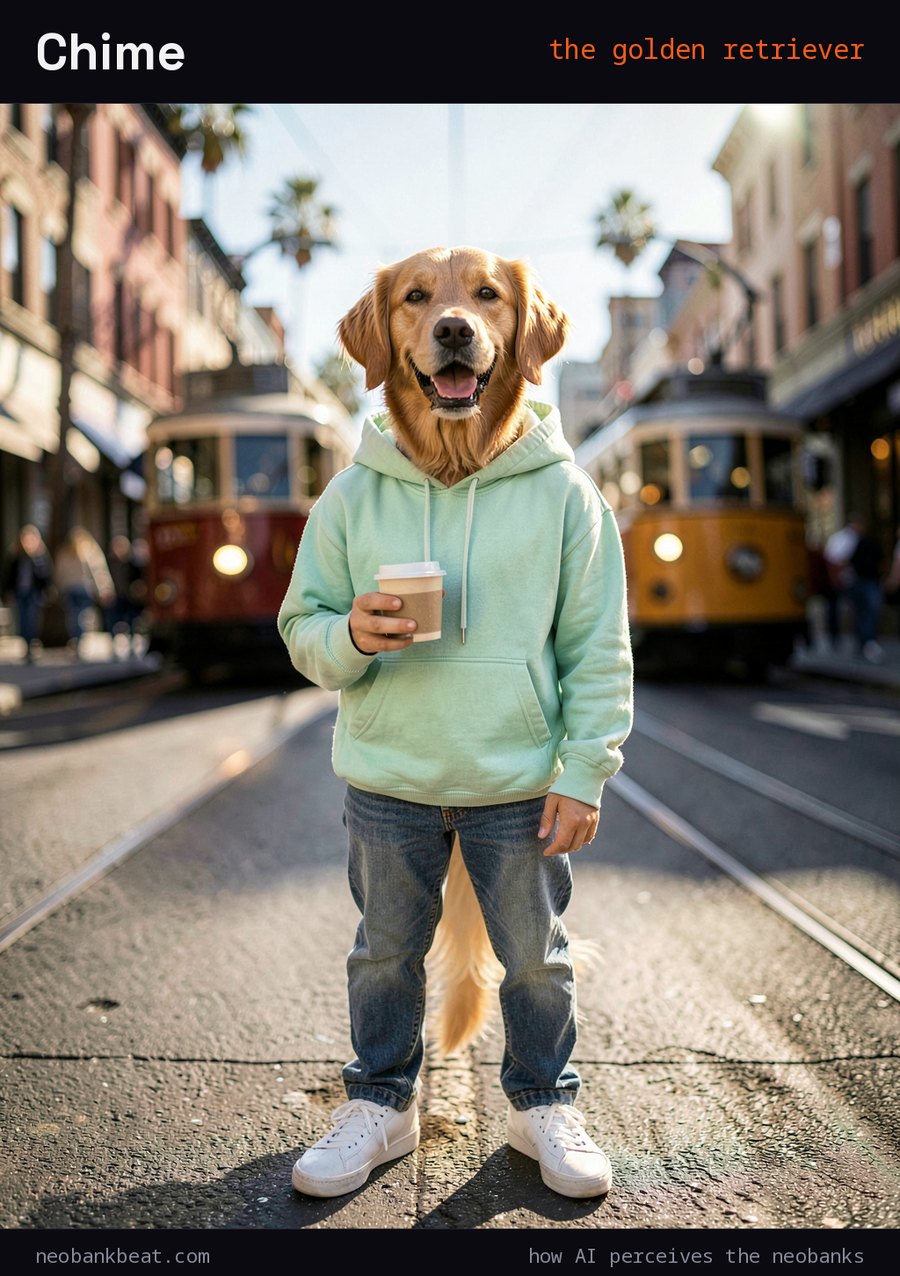
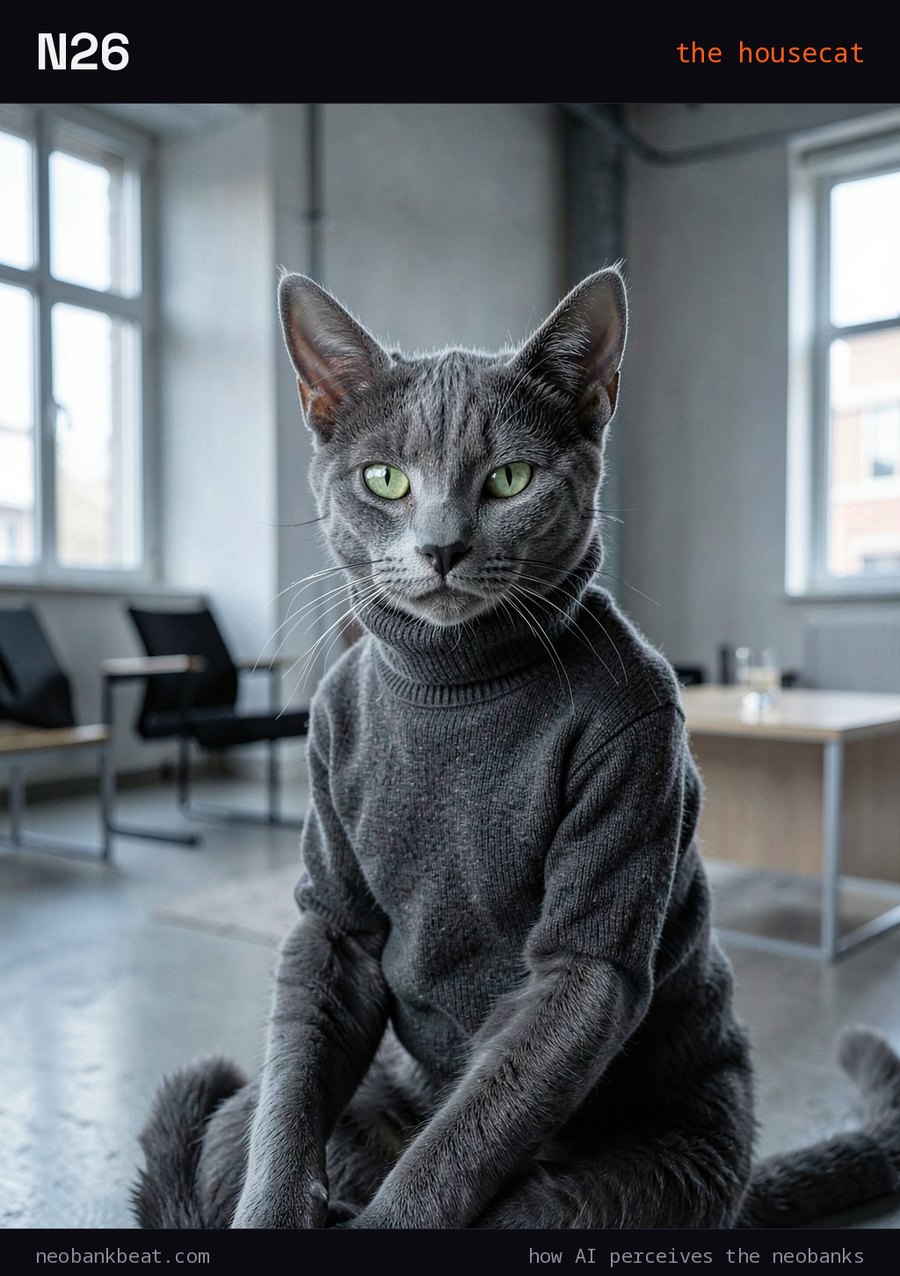
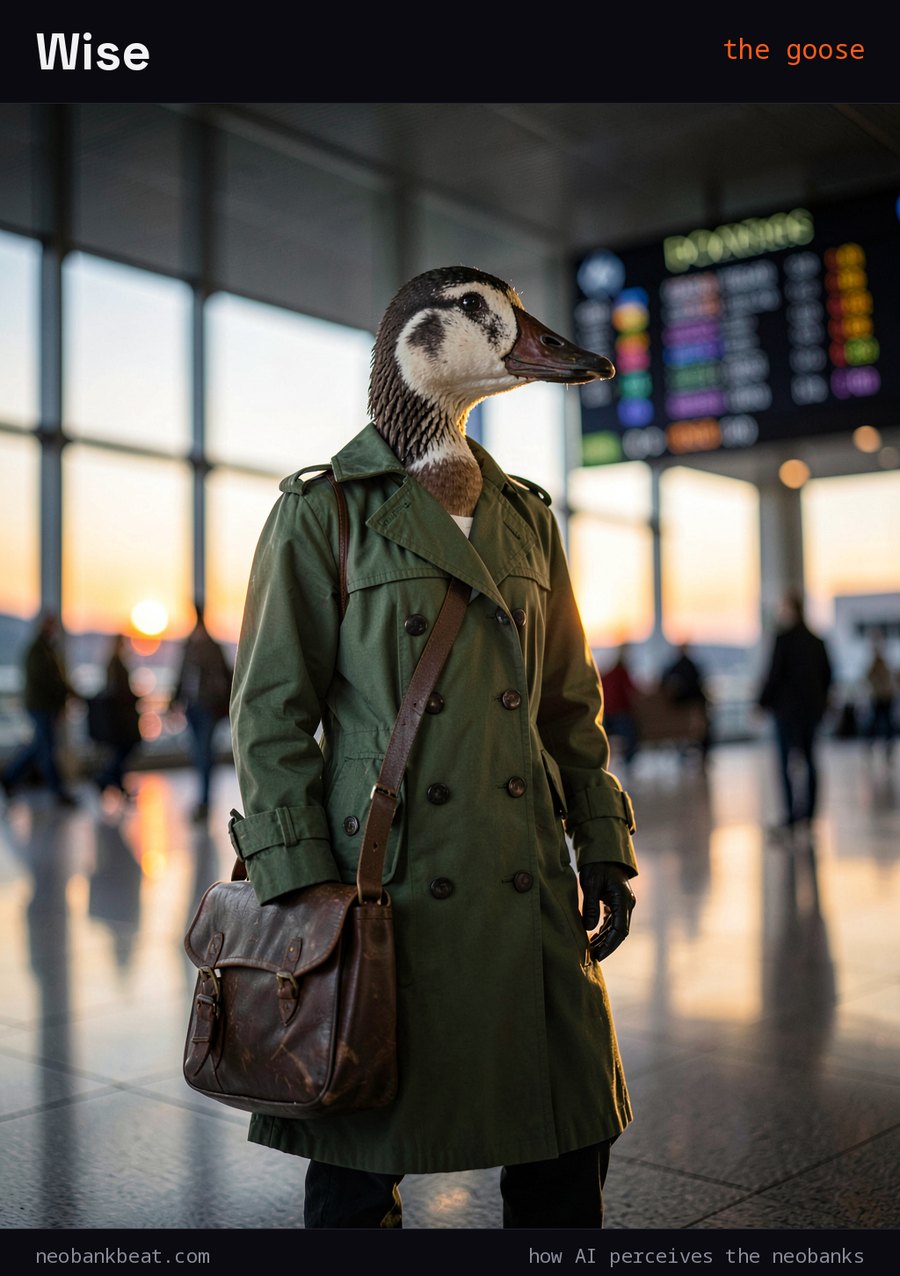
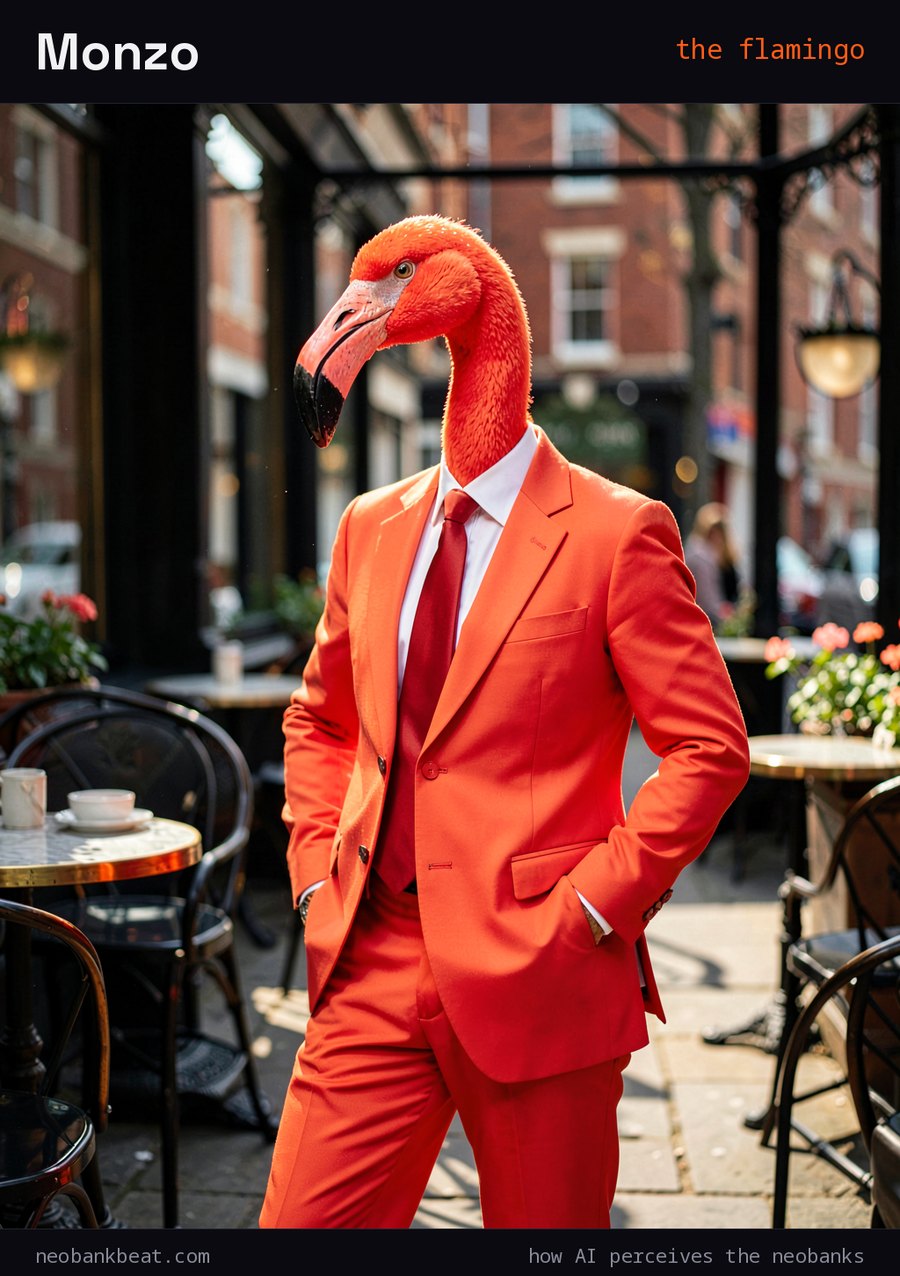
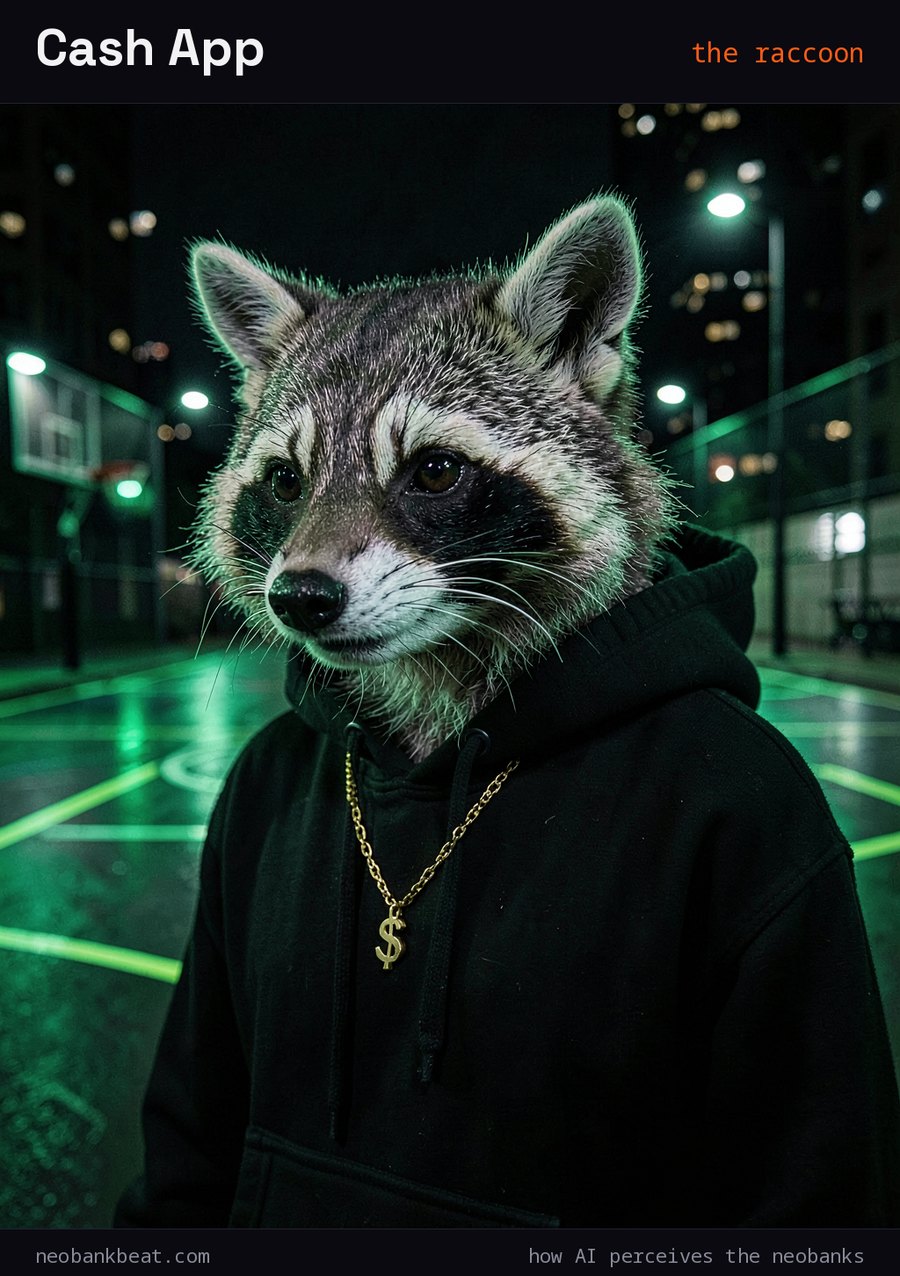
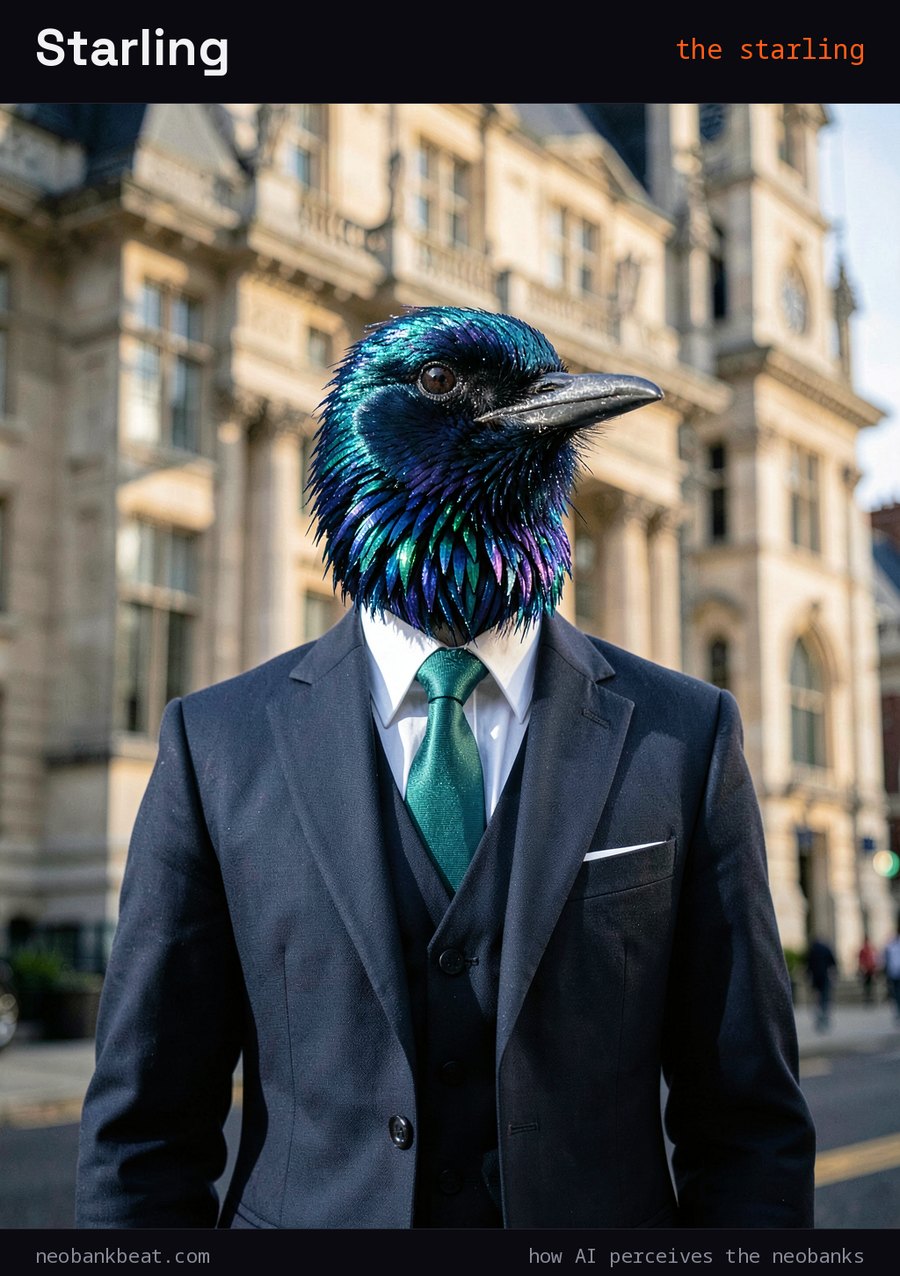
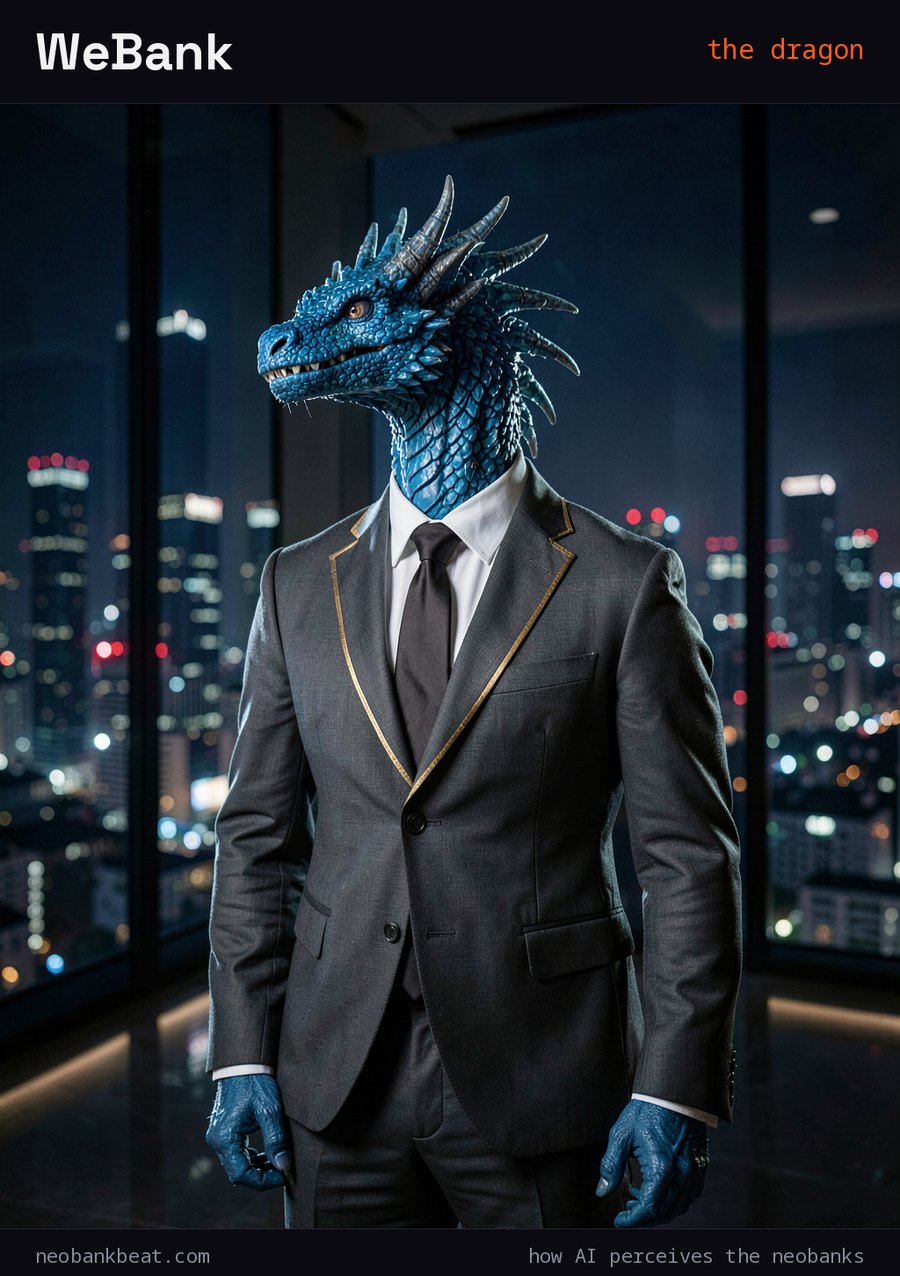
All ten on one poster
Methodology, such as it is
Each portrait was generated by FLUX.2 Klein, a 4B-parameter open-weight image model, running locally on a MacBook — no cloud APIs, roughly four and a half minutes per image. The prompt template was the same for all ten ("editorial fashion portrait, 85mm lens" plus the animal and styling cues); the animal for each brand came from asking a language model for the single animal each neobank evokes and taking its first answer. Fixed seeds, no cherry-picking beyond one render each.
Is this rigorous brand research? Absolutely not. Is it what the collective training data of the internet — every review, every fee complaint, every app-store rating — thinks these companies are? A little bit, yes. For the version of this site backed by 379 verified profiles instead of vibes, start at the directory, ask your questions at ask AI, or pull data.json yourself.
Images are AI-generated caricatures for commentary, not affiliated with or endorsed by any brand shown. Brand names remain the property of their owners. Nothing here is investment advice — or zoological advice.